
September 7-9, 2027 • Caesars Forum • Las Vegas
What is it?
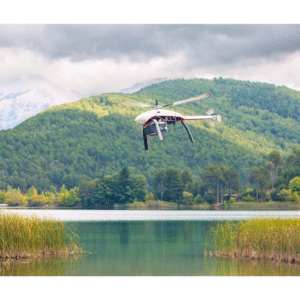
Our design philosophy has three fundamental principles: simplicity, efficiency, and reliability. At the core of our product line are the Velos V3 and V-Twin UAV helicopters, which represent two complementary approaches: on the one hand, agility and operational maturity, and on the other, enhanced capabilities and payload capacity. The Velos V3 offers high flexibility and reliability across a wide range of applications, while the V-Twin, with its tandem rotor configuration, extends its operational envelope to heavy-lift missions and more demanding scenarios. A shared cornerstone of both platforms is the patented twin transmission system, which enables mission continuation even in the event of a critical failure, reinforcing overall safety.
Who is using it?
The platforms of Velos Rotors are used across energy & infrastructure (inspection of power lines, wind turbines, pipelines), geospatial & surveying (LiDAR, mapping), agriculture (crop monitoring), industrial inspection (utilities, emissions monitoring), defense & security (ISR, demining), logistics (cargo delivery), and emergency response (search & rescue). Typical users include UAV operators, surveyors, engineering teams, utility asset managers, defense personnel, and emergency response teams.
How is it making an impact?
A relevant use case is infrastructure inspection where the Velos V3 has been deployed in railway monitoring projects such as trials with Network Rail in the UK. Operating beyond visual line of sight (BVLOS), the platform was able to survey hundreds of kilometers of track in a short time, detecting faults and intrusions early and enabling faster maintenance response. This reduces inspection time, operational risk, and service disruption compared to traditional ground-based or manned inspection methods, while improving asset reliability, maintenance planning, and overall network efficiency. It also enables more frequent inspections at lower cost, supporting predictive maintenance strategies and reducing the need for disruptive track closures.