
September 7-9, 2027 • Caesars Forum • Las Vegas
What is it?
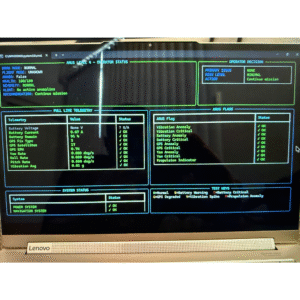
ARUS (Adaptive Resilient UAV System) is an AI-assisted supervisory platform designed to improve the resilience, survivability, and operational effectiveness of industrial UAV systems during real-world missions. Rather than replacing the flight controller, ARUS acts as an intelligent monitoring and decision-support layer operating above existing autopilot systems.
ARUS continuously analyzes telemetry, mission status, aircraft health, environmental conditions, and AI-based sensor inputs in real time. Using adaptive mission logic, it detects anomalies and recommends or initiates survivability actions before failures escalate into mission loss.
Examples include:
• Detecting propulsion degradation before complete failure
• Identifying abnormal battery behavior or energy trends
• Monitoring GPS degradation or communication loss
• Adjusting mission strategy based on changing conditions
• AI-based target identification through thermal and visual systems
• Providing operator-supervised recommendations during critical situations
The overall objective is to move industrial drone operations beyond static failsafe behavior and toward practical supervised autonomy.
Who is using it?
Industries:
• Industrial inspection (powerlines, solar, utilities)
• Public safety and emergency response
• Search and rescue operations
• Infrastructure inspection
• Environmental and wildlife monitoring
• Energy and critical infrastructure operations
• Commercial drone services
Relevant users:
• UAV operators
• Drone pilots
• Fleet managers
• Public safety agencies
• Search and rescue coordinators
• Utility inspection teams
• Emergency response teams
• Industrial operations managers
How is it making an impact?
ARUS addresses one of the largest limitations in current UAV operations: traditional systems typically respond with predefined actions such as Return-to-Launch or immediate landing when failures occur.
Example use case:
During an industrial inspection mission, ARUS detects increasing vibration and abnormal propulsion behavior indicating a potential motor anomaly. Rather than waiting for complete failure, ARUS analyzes confidence levels from multiple data sources, warns the operator, recommends speed reduction and route modification, and can transition into a survivability mode designed to preserve aircraft stability and safely complete or terminate the mission.
This approach can reduce mission losses, improve operational safety, and support higher reliability for industrial UAV deployments.