Getting regulatory approval is only part of what it takes to operate successfully in complex airspace. Whether you’re flying in a dense urban environment, coordinating with a municipality, or integrating into active airport operations, the gap between authorization and genuine acceptance requires communication, professionalism, and a deep understanding of how different stakeholders — from local authorities to air traffic control to airport operators — think about drone activity in their environments.
This session examines the full picture of what complex airspace operations demand from today’s drone professionals. Topics include navigating the permitting and insurance landscape across varying state and local jurisdictions, understanding the distinct roles of the FAA and DHS, the practical differences between commercial and recreational operations, and how to build the kind of stakeholder confidence that turns one-off approvals into sustainable long-term access. For operators looking to expand into more demanding operational environments, this session provides both the foundational knowledge and the field-tested perspective needed to do it right.
The following presentations will be shared in this session:
Integrating UAS Operations in Active Airport Environments
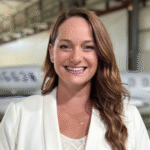
Presented by Lindsey Dreiling, Dreiling Aviation Services
Integrating drones into active airport environments requires disciplined coordination, operational transparency, and earned stakeholder confidence. This presentation draws on firsthand experience supporting routine UAS operations within Class D airspace to examine what responsible integration actually looks like in practice. Topics include coordination with air traffic control, alignment with airport operating procedures, enterprise risk and liability considerations, and the stakeholder communication strategies that determine whether drone programs gain long-term acceptance in controlled environments. Beyond minimum compliance, attendees will explore how operators manage visual and noise presence, reinforce safety perception, and maintain community trust — the factors that separate operators who are merely authorized from those who genuinely belong in the environment they’re flying in.
Integrating Drone Delivery into Dense Urban and Controlled Airspace
Presented by Alex Norman-Elvenich, Matternet
Matternet operates in some of the most complex airspace in the world — city centers, hospital campuses, and residential neighborhoods where autonomous aircraft share the sky with a variety of other aircraft. This presentation draws on operational experience across three continents and four advanced regulatory jurisdictions, including routine BVLOS delivery in Central London for the NHS and the first home delivery service in Silicon Valley, to examine what it takes to sustain daily operations long after the authorization is granted. Topics include coordinating with municipalities, air traffic control, and airport operators across the life of a route; navigating permitting variability between state and local jurisdictions; designing operations around noise and visual presence in dense environments; and how airworthiness credentials — Type Certification, Production Certification, and Part 135 operations — reshape the stakeholder conversation. Attendees will leave with a practical view of how one-off approvals become permanent infrastructure.